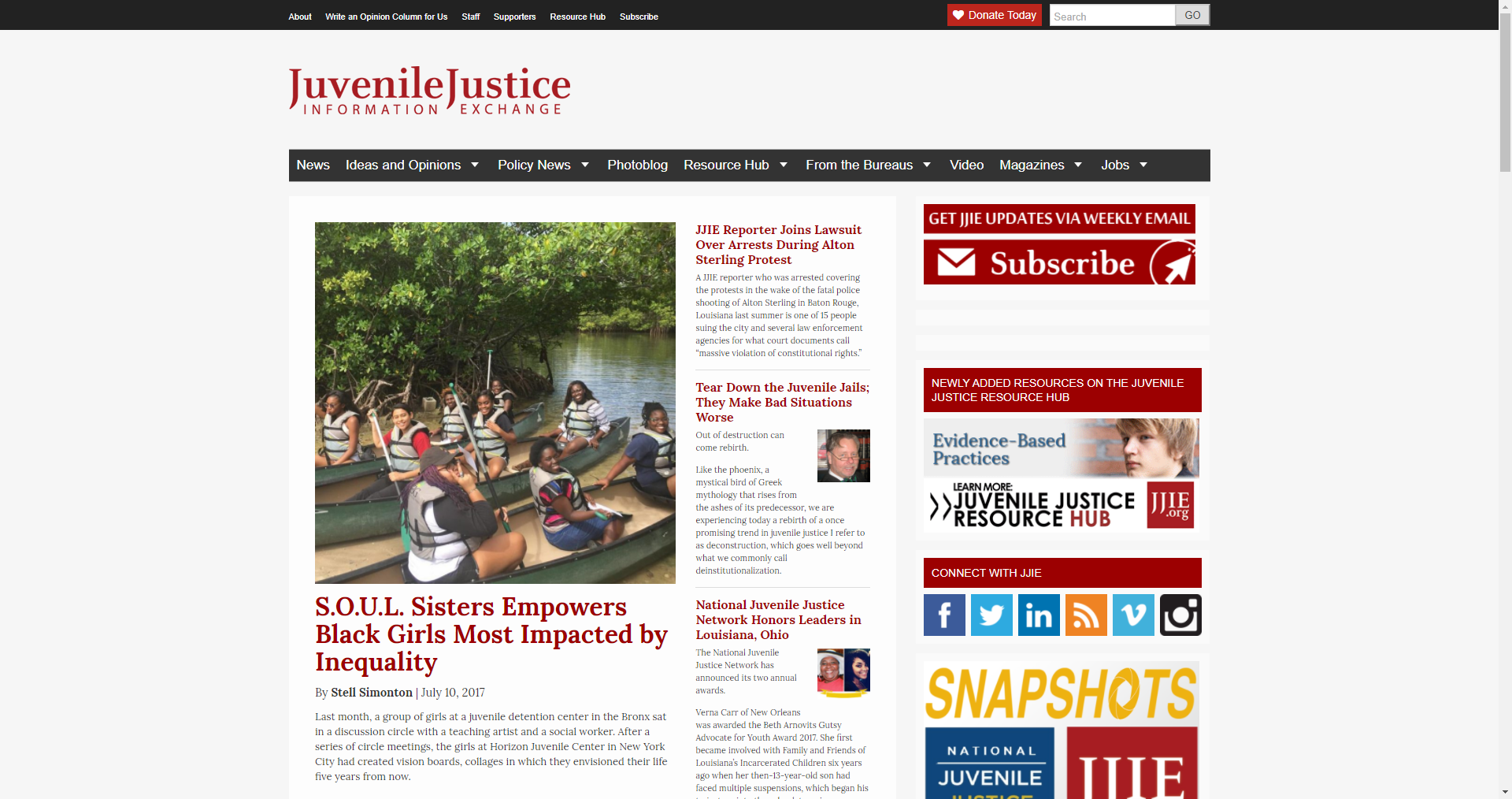
Recruited as an intern. Stayed for six years.
I came to the Juvenile Justice Information Exchange in my senior year of college, recruited by the executive director of the Center for Sustainable Journalism — who was also one of my journalism professors. He'd seen my work and wanted to bring me on as an intern reporter. I said yes, and I didn't leave for six years.
The JJIE was a small, ambitious operation covering juvenile justice and child welfare news — a beat that national outlets largely ignored and that had real consequences for real kids. The work mattered. That made it easy to care about getting it right.
One story that changed everything.
One of my first assignments was a story about a reality TV show called Beyond Scared Straight, which was about to debut on A&E. The premise was familiar: take troubled teenagers inside a prison and let inmates scare them straight. The idea had been around since the 1970s and most people assumed it worked.
The research said otherwise. Study after study had found that Scared Straight programs not only failed to reduce recidivism — they made it worse. Kids who went through the programs were statistically more likely to reoffend than kids in control groups.
I wrote the story. It ran before the show's premiere, and it drew an enormous amount of traffic — far more than anything the site had published before. It got picked up nationally. People were angry. The show's producers responded. Researchers and advocates cited it. More importantly, it reframed a conversation that had largely gone unexamined.
That story changed what JJIE was. Before it, we were a regional outlet covering mostly Georgia-specific news. After it, we were a national site that people in the field took seriously. The story arrived at the right moment and made the case that this kind of journalism — rigorously reported, clearly written, unafraid to challenge conventional wisdom — had a real audience and a real impact.
From reporter to managing editor.
I was hired full-time after graduating, and over the next five years my role expanded considerably. I continued to report and write — longform narrative journalism was what I loved most, and I won my first press association award — a Society of Professional Journalists Green Eyeshade Award — within the first year for a story about misdiagnosed child abuse — but I also took on more of the organization's digital operations.
I was promoted to Deputy Editor of JJIE and began helping set editorial direction. When we launched a print publication, I designed and laid out each issue. I took over social media strategy. I designed and built successive versions of the JJIE website and oversaw special digital projects across the Center for Sustainable Journalism.
By the time I left, my title was Managing Editor for Digital News Operations for the CSJ and Editor of JJIE. I was overseeing the day-to-day operations of the newsroom, managing a staff of reporters and editors, and responsible for the full digital presence of the organization.
Where writing and building first converged.
I arrived at JJIE as a writer. I left as someone who could also build and run the digital operation behind the writing. That convergence — learning to think about stories and systems at the same time — is the foundation everything else is built on.
The principles I internalized covering juvenile justice still show up in my engineering work: lead with what matters, earn every word, structure the work so the reader — or the user — always knows where they are. An inverted pyramid and a well-architected component have more in common than most people would expect.